Call one of our experts to discuss your next holiday with Vertical Explorers +92 (0)31 555 444 34
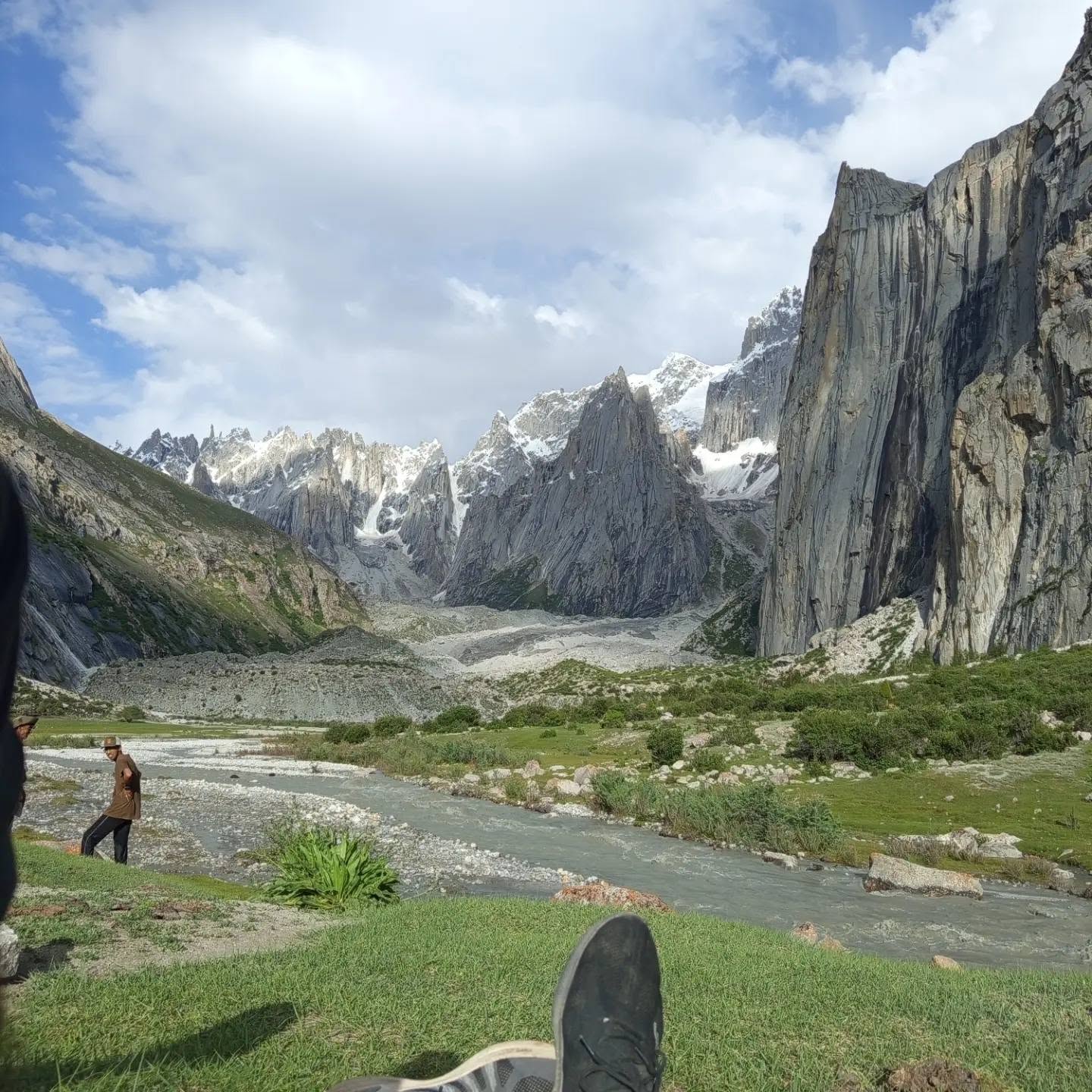
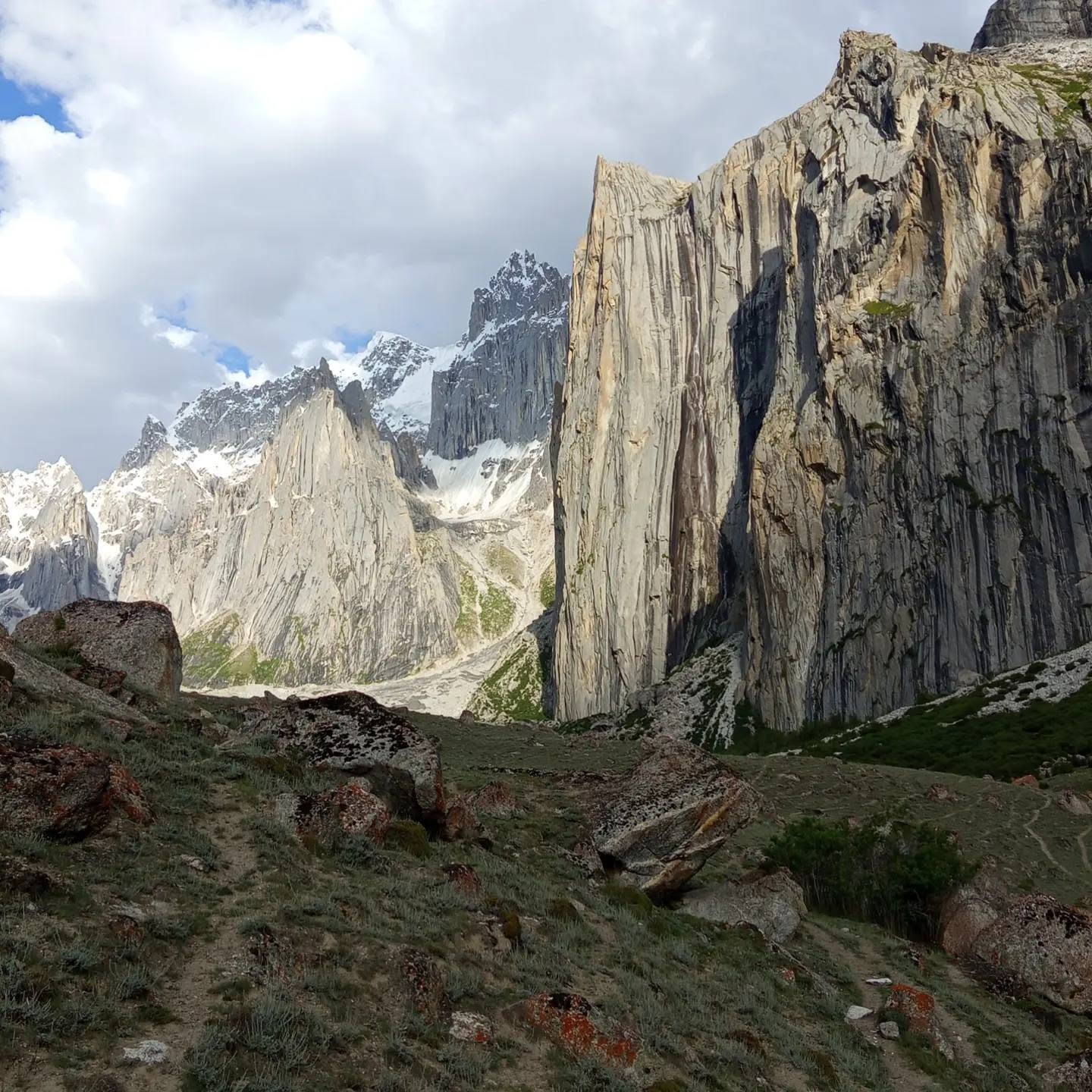
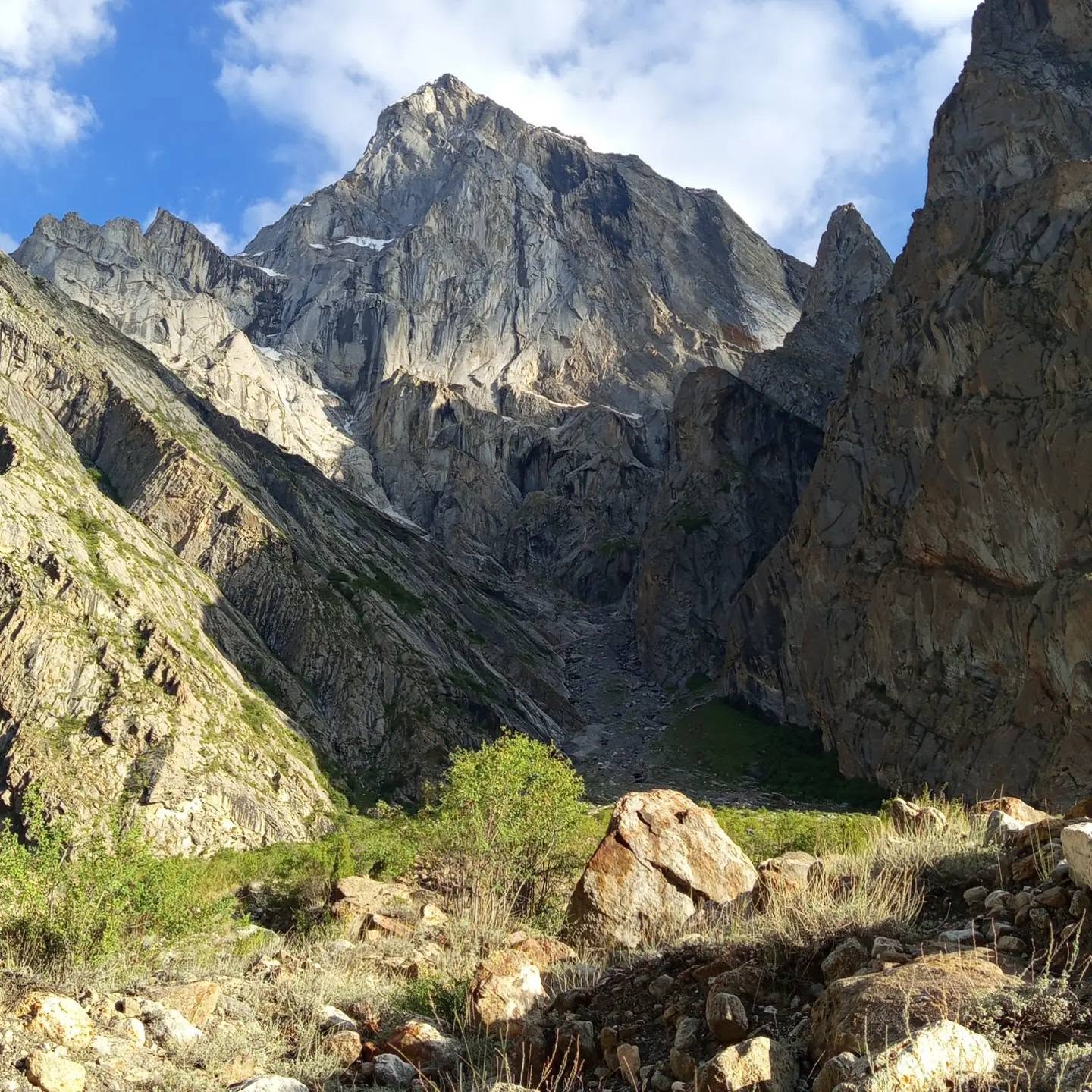
Hidden deep in the Karakoram Mountains of Gilgit-Baltistan, Nangma Valley is one of Pakistan’s most spectacular and still relatively little-known trekking destinations. Located in the Hushe Valley region of Ghanche District in Baltistan, Nangma is reached on foot from the traditional Balti village of Kanday.
The valley is renowned for its immense granite walls, alpine meadows, glacial landscapes and dramatic mountain scenery. For climbers, Nangma is a legendary destination for big-wall climbing, while trekkers are drawn by the opportunity to walk beneath some of the Karakoram’s most impressive rock towers without undertaking a long expedition such as the K2 Base Camp trek.
Often described as “the Yosemite of Pakistan,” Nangma Valley combines enormous granite cliffs with green summer pastures, cold glacial streams, rugged peaks and an extraordinary sense of wilderness.
It is a destination for travelers who want to experience the raw, quieter side of Baltistan.
Nangma Valley lies in the Hushe region of Ghanche District, Gilgit-Baltistan, in the eastern Karakoram of Pakistan.
The principal gateway is Kanday village, a traditional Balti settlement situated at the entrance to the Nangma trekking route. Travelers generally reach Kanday from Skardu via Khaplu and the Hushe Valley, before continuing into Nangma on foot.
The broad travel route is:
Skardu → Khaplu → Hushe Valley → Kanday → Nangma Valley
Unlike destinations that can be reached directly by vehicle, Nangma itself is a trekking destination. The road journey ends around Kanday, after which the landscape changes from villages, cultivated fields and orchards to mountain trails, summer pastures, alpine terrain and towering granite walls.
National Geographic recently described the route as a roughly 16-mile trail into a glacially enclosed mountain basin, beginning among the fields and orchards of Kanday before rising into increasingly dramatic alpine terrain.
Kanday is much more than a trailhead.
The small Balti village provides an important introduction to the culture and landscape of the region. Traditional agriculture, orchards, mountain pastures and centuries-old relationships with the surrounding mountains remain part of everyday life.
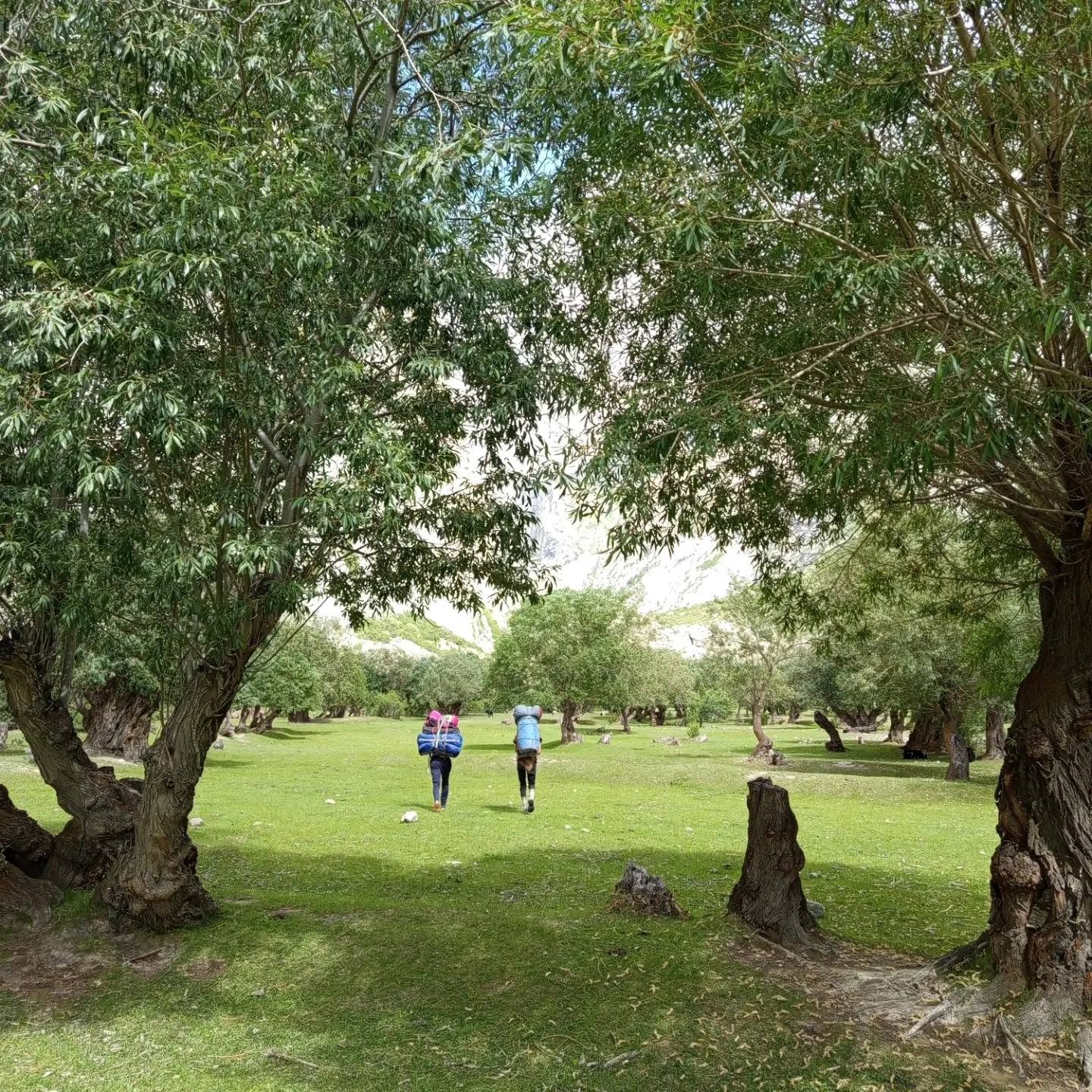
The approach to Nangma begins among cultivated fields and apricot trees before gradually entering more rugged mountain terrain. This transition is one of the attractions of the trek: travelers experience the journey from a living Balti community into a remote high-mountain wilderness rather than simply arriving at a viewpoint by road.
Kanday also provides employment opportunities for local guides, porters, cooks, drivers and other tourism workers. Responsible tourism in Nangma can therefore contribute directly to communities in the Hushe region.
National Geographic highlighted the role of local porters and cooks in supporting trekking groups entering Nangma, illustrating how adventure tourism can create economic opportunities in remote Balti communities.
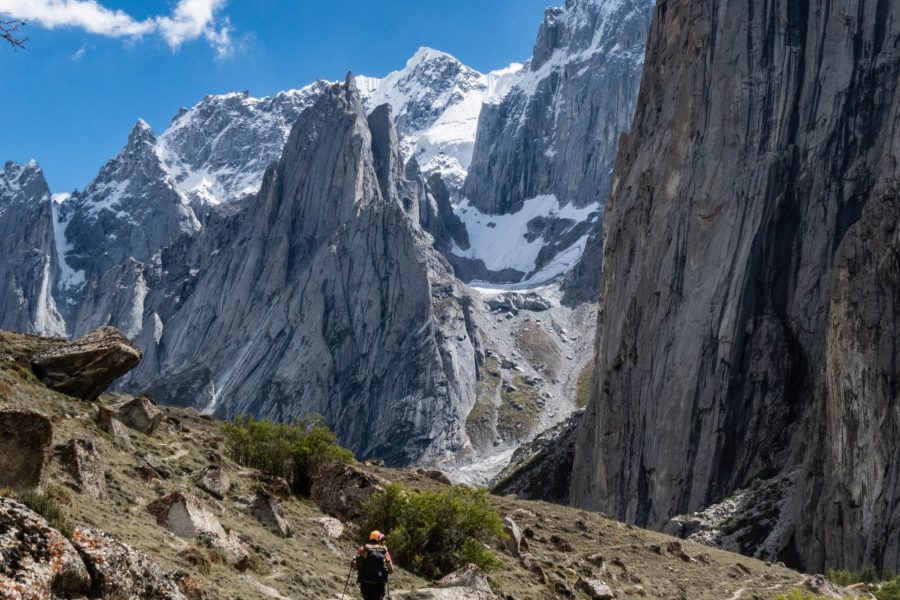
The defining feature of Nangma Valley is its extraordinary granite architecture.
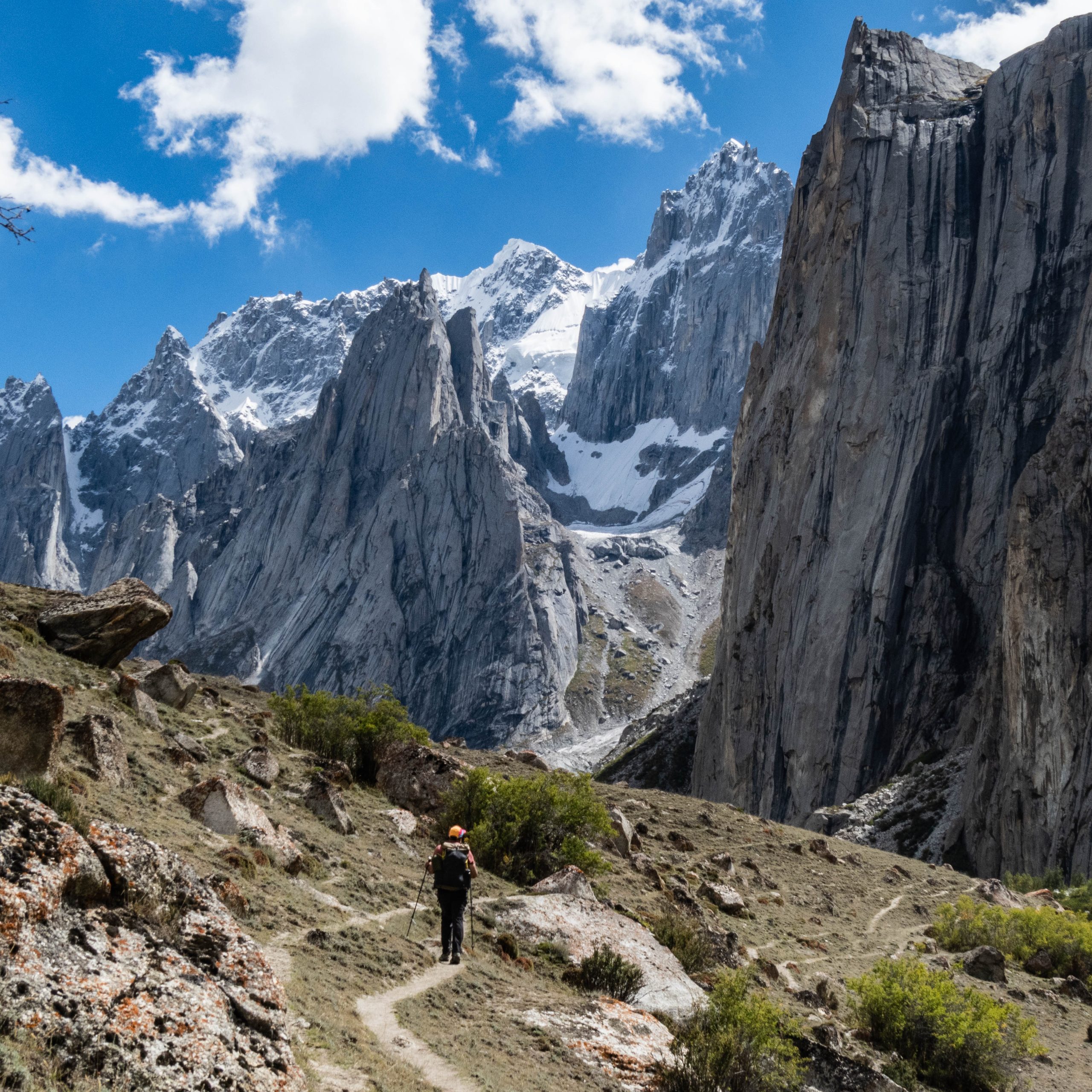
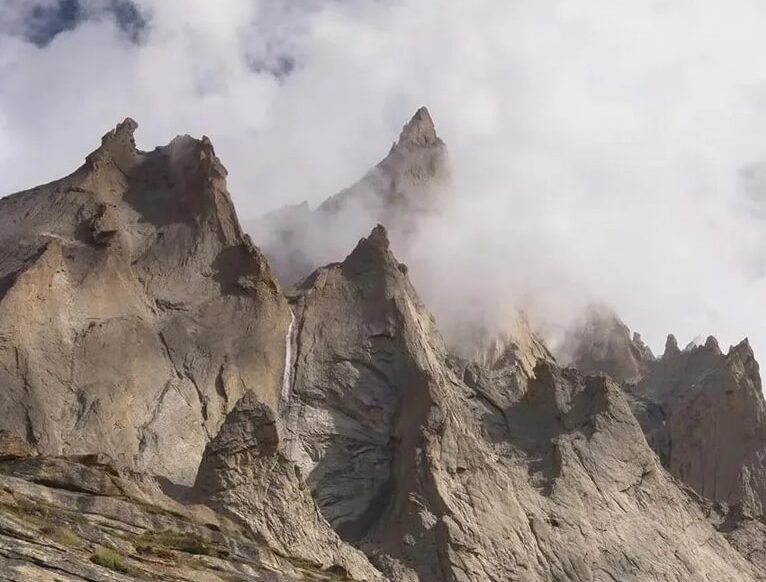
Massive rock walls and towers rise dramatically above the valley floor, creating an enormous natural amphitheatre. Some walls rise for more than a kilometre above their surroundings, giving Nangma an appearance more commonly associated with famous climbing destinations such as Yosemite or Patagonia.
Among the best-known formations is Amin Brakk, one of the valley’s most famous climbing objectives.
For trekkers, however, there is no need to climb these walls. The spectacle comes from simply walking beneath them.
The nickname “Yosemite of Pakistan” is increasingly associated with Nangma because of its combination of immense granite walls, green meadows and a glacially shaped valley.
The comparison should not be taken literally—Nangma has its own distinct Karakoram character—but it helps explain the visual experience.
The valley combines:
The result is a landscape that feels dramatically larger than the relatively short approach trek might suggest.
The Nangma Valley Trek is the main way for visitors to experience the valley.
The route begins at Kanday and follows mountain trails toward Mingulo Broq, an alpine summer pasture, before continuing deeper into Nangma Valley.
Depending on the itinerary and side excursions, the trekking program generally takes several days from Kanday and can be incorporated into a longer Baltistan journey.
Current trekking descriptions place the main valley camping area at roughly 3,900–4,000 metres, while optional excursions toward higher viewpoints and climbing base camps reach approximately 4,300–4,500 metres. Exact elevations vary according to the campsite and route used.
Kanday → Mingulo Broq → Nangma Valley → Upper Valley / Base Camp area → Kanday
The route is not a technical climbing expedition. However, it is a high-altitude mountain trek, and the combination of altitude, steep sections, rocky terrain and remote conditions means travelers should be physically prepared.
One of the memorable sections of the Nangma trek is Mingulo Broq, a high summer pasture used by local communities.
Here the character of the landscape changes dramatically.
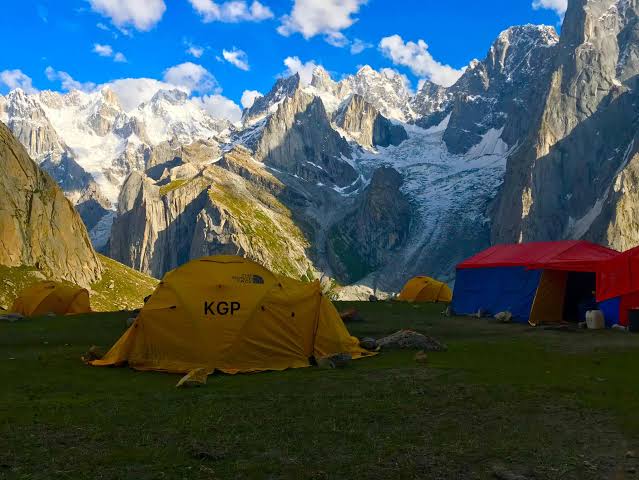
The cultivated fields of the lower valley give way to open alpine grassland surrounded by sharp, rugged mountain peaks. During the trekking season, wildflowers and grazing animals add color to the otherwise monumental granite landscape.
Mingulo Broq also demonstrates the connection between tourism and traditional mountain livelihoods. These high pastures are not merely scenic camping locations; they form part of the seasonal pastoral landscape used by local communities.
National Geographic’s account of the Nangma journey describes reaching Mingulo Broq after several hours of hiking, with sharp mountain peaks surrounding the summer pasture.
The deeper travelers go into Nangma, the more dramatic the landscape becomes.
The trail enters a high mountain environment characterized by:
At the upper end of the valley, the landscape forms a spectacular glacial amphitheatre.
The scale is difficult to appreciate from photographs. Campers can stand on a relatively open valley floor while enormous granite walls rise almost vertically around them.
National Geographic described the upper valley as a glacial basin surrounded by towering granite spires, with the valley floor opening into broad areas of grass and rock beneath the surrounding glaciers.
For mountaineers and climbers, Amin Brakk is one of Nangma Valley’s defining landmarks.
The granite tower rises to approximately 5,850 metres and has an enormous near-vertical rock face. It has attracted experienced international climbers because of its technical climbing challenges and imposing granite walls.
The first successful ascent of Amin Brakk was completed in August 1999 by Spanish climbers Silvia Vidal, Pep Masip and Miguel Puigdomenech. The mountain was named Amin in honour of the team’s cook.
For ordinary trekkers, Amin Brakk is primarily a spectacular mountain landmark and viewpoint objective rather than a climbing destination.
The surrounding Nangma landscape also has a long history of exploration and first ascents. The American Alpine Club records numerous climbing routes and ascents in the valley, demonstrating the area’s international importance within the Karakoram climbing community.
Nangma is particularly attractive to trekkers who want a genuine high-mountain experience without committing to one of Pakistan’s longest trekking expeditions.
It offers:
The granite walls and mountain amphitheatre provide some of the most spectacular scenery in Baltistan.
The main approach can be completed in several trekking days, making Nangma easier to combine with a wider Baltistan itinerary.
There are no conventional hotels or developed tourist infrastructure deep inside the valley. Camping is part of the experience.
The journey begins in Balti villages and passes through traditional agricultural and pastoral landscapes.
The combination of granite towers, green meadows, glaciers, streams, wildflowers and high peaks makes Nangma particularly attractive to landscape photographers.
Compared with famous routes such as K2 Base Camp and the Baltoro Glacier, Nangma offers a much less crowded mountain experience.
Nangma is an exceptional destination for mountain photography.
The contrast between green alpine meadows and near-vertical granite walls is one of the valley’s defining visual characteristics.
The best photographic subjects include:
Early morning and late afternoon provide particularly dramatic light on the granite walls.
The valley’s remoteness also means there is little artificial light, making clear nights particularly rewarding for astrophotography.
Nangma Valley is not simply a trekking destination.
It is one of the notable big-wall climbing areas of the Karakoram.
The valley contains numerous granite towers and walls, several of which have been explored and climbed by international mountaineering teams. Historical climbing reports document technical routes on formations including Amin Brakk, Changi Tower, Nawaz Brakk and other walls in the Nangma area.
Experienced climbers may visit Nangma for:
However, the climbing environment is not suitable for ordinary trekkers without advanced technical climbing skills.
A trekker can enjoy the valley without climbing any of its major rock faces.
Nangma’s high-altitude environment supports a range of mountain wildlife.
Travelers may encounter birds such as red-billed choughs, while signs of larger mammals can sometimes be found in the surrounding mountains.
The wider Karakoram environment is habitat for species including:
Wildlife sightings are never guaranteed, and visitors should avoid disturbing animals or approaching them.
The best wildlife experience in Nangma is often simply observing the mountain ecosystem from a respectful distance.
The principal trekking season is summer, generally from June through September, although actual conditions vary from year to year.
The valley begins turning green as snow melts and summer pastures become accessible.
Best for: fewer visitors, fresh landscapes and early-season trekking.
Warm conditions and green alpine meadows make July one of the most attractive months.
Best for: wildflowers, trekking and photography.
August is generally among the warmest trekking months and can attract more trekking and climbing groups.
Best for: stable summer trekking conditions and climbing activity.
September brings colder nights but often excellent visibility and beautiful autumn light.
Best for: photographers, quieter trails and crisp mountain views.
Outside the main summer season, snow and winter conditions can make the upper valley inaccessible or significantly more demanding.
Most travelers approach Nangma from Skardu.
A typical journey follows:
Islamabad → Skardu → Khaplu → Hushe region → Kanday → Nangma Valley
Skardu serves as the principal logistical hub for Baltistan. From there, travelers continue toward Khaplu, one of the historic towns of eastern Baltistan, and then toward the Hushe Valley and Kanday.
The final approach to Kanday involves mountain roads, after which the Nangma Valley route continues on foot.
Travel times can vary considerably depending on road conditions, weather, vehicle type and the condition of the mountain route.
For an organized trek, travelers should arrange local transport, guides, porters, camping equipment and meals before entering the valley.
Hidden deep in the Karakoram Mountains of Gilgit-Baltistan, Nangma Valley is one of Pakistan’s most spectacular and still relatively little-known trekking destinations. Located in the Hushe Valley region of Ghanche District in Baltistan, Nangma is reached on foot from the traditional Balti village of Kanday.
The valley is renowned for its immense granite walls, alpine meadows, glacial landscapes and dramatic mountain scenery. For climbers, Nangma is a legendary destination for big-wall climbing, while trekkers are drawn by the opportunity to walk beneath some of the Karakoram’s most impressive rock towers without undertaking a long expedition such as the K2 Base Camp trek.
Often described as “the Yosemite of Pakistan,” Nangma Valley combines enormous granite cliffs with green summer pastures, cold glacial streams, rugged peaks and an extraordinary sense of wilderness.
It is a destination for travelers who want to experience the raw, quieter side of Baltistan.
Nangma Valley lies in the Hushe region of Ghanche District, Gilgit-Baltistan, in the eastern Karakoram of Pakistan.
The principal gateway is Kanday village, a traditional Balti settlement situated at the entrance to the Nangma trekking route. Travelers generally reach Kanday from Skardu via Khaplu and the Hushe Valley, before continuing into Nangma on foot.
The broad travel route is:
Skardu → Khaplu → Hushe Valley → Kanday → Nangma Valley
Unlike destinations that can be reached directly by vehicle, Nangma itself is a trekking destination. The road journey ends around Kanday, after which the landscape changes from villages, cultivated fields and orchards to mountain trails, summer pastures, alpine terrain and towering granite walls.
National Geographic recently described the route as a roughly 16-mile trail into a glacially enclosed mountain basin, beginning among the fields and orchards of Kanday before rising into increasingly dramatic alpine terrain.
Kanday is much more than a trailhead.
The small Balti village provides an important introduction to the culture and landscape of the region. Traditional agriculture, orchards, mountain pastures and centuries-old relationships with the surrounding mountains remain part of everyday life.
The approach to Nangma begins among cultivated fields and apricot trees before gradually entering more rugged mountain terrain. This transition is one of the attractions of the trek: travelers experience the journey from a living Balti community into a remote high-mountain wilderness rather than simply arriving at a viewpoint by road.
Kanday also provides employment opportunities for local guides, porters, cooks, drivers and other tourism workers. Responsible tourism in Nangma can therefore contribute directly to communities in the Hushe region.
National Geographic highlighted the role of local porters and cooks in supporting trekking groups entering Nangma, illustrating how adventure tourism can create economic opportunities in remote Balti communities.
The defining feature of Nangma Valley is its extraordinary granite architecture.
Massive rock walls and towers rise dramatically above the valley floor, creating an enormous natural amphitheatre. Some walls rise for more than a kilometre above their surroundings, giving Nangma an appearance more commonly associated with famous climbing destinations such as Yosemite or Patagonia.
Among the best-known formations is Amin Brakk, one of the valley’s most famous climbing objectives.
For trekkers, however, there is no need to climb these walls. The spectacle comes from simply walking beneath them.
The nickname “Yosemite of Pakistan” is increasingly associated with Nangma because of its combination of immense granite walls, green meadows and a glacially shaped valley.
The comparison should not be taken literally—Nangma has its own distinct Karakoram character—but it helps explain the visual experience.
The valley combines:
The result is a landscape that feels dramatically larger than the relatively short approach trek might suggest.
The Nangma Valley Trek is the main way for visitors to experience the valley.
The route begins at Kanday and follows mountain trails toward Mingulo Broq, an alpine summer pasture, before continuing deeper into Nangma Valley.
Depending on the itinerary and side excursions, the trekking program generally takes several days from Kanday and can be incorporated into a longer Baltistan journey.
Current trekking descriptions place the main valley camping area at roughly 3,900–4,000 metres, while optional excursions toward higher viewpoints and climbing base camps reach approximately 4,300–4,500 metres. Exact elevations vary according to the campsite and route used.
Kanday → Mingulo Broq → Nangma Valley → Upper Valley / Base Camp area → Kanday
The route is not a technical climbing expedition. However, it is a high-altitude mountain trek, and the combination of altitude, steep sections, rocky terrain and remote conditions means travelers should be physically prepared.
One of the memorable sections of the Nangma trek is Mingulo Broq, a high summer pasture used by local communities.
Here the character of the landscape changes dramatically.
The cultivated fields of the lower valley give way to open alpine grassland surrounded by sharp, rugged mountain peaks. During the trekking season, wildflowers and grazing animals add color to the otherwise monumental granite landscape.
Mingulo Broq also demonstrates the connection between tourism and traditional mountain livelihoods. These high pastures are not merely scenic camping locations; they form part of the seasonal pastoral landscape used by local communities.
National Geographic’s account of the Nangma journey describes reaching Mingulo Broq after several hours of hiking, with sharp mountain peaks surrounding the summer pasture.
The deeper travelers go into Nangma, the more dramatic the landscape becomes.
The trail enters a high mountain environment characterized by:
At the upper end of the valley, the landscape forms a spectacular glacial amphitheatre.
The scale is difficult to appreciate from photographs. Campers can stand on a relatively open valley floor while enormous granite walls rise almost vertically around them.
National Geographic described the upper valley as a glacial basin surrounded by towering granite spires, with the valley floor opening into broad areas of grass and rock beneath the surrounding glaciers.
For mountaineers and climbers, Amin Brakk is one of Nangma Valley’s defining landmarks.
The granite tower rises to approximately 5,850 metres and has an enormous near-vertical rock face. It has attracted experienced international climbers because of its technical climbing challenges and imposing granite walls.
The first successful ascent of Amin Brakk was completed in August 1999 by Spanish climbers Silvia Vidal, Pep Masip and Miguel Puigdomenech. The mountain was named Amin in honour of the team’s cook.
For ordinary trekkers, Amin Brakk is primarily a spectacular mountain landmark and viewpoint objective rather than a climbing destination.
The surrounding Nangma landscape also has a long history of exploration and first ascents. The American Alpine Club records numerous climbing routes and ascents in the valley, demonstrating the area’s international importance within the Karakoram climbing community.
Nangma is particularly attractive to trekkers who want a genuine high-mountain experience without committing to one of Pakistan’s longest trekking expeditions.
It offers:
The granite walls and mountain amphitheatre provide some of the most spectacular scenery in Baltistan.
The main approach can be completed in several trekking days, making Nangma easier to combine with a wider Baltistan itinerary.
There are no conventional hotels or developed tourist infrastructure deep inside the valley. Camping is part of the experience.
The journey begins in Balti villages and passes through traditional agricultural and pastoral landscapes.
The combination of granite towers, green meadows, glaciers, streams, wildflowers and high peaks makes Nangma particularly attractive to landscape photographers.
Compared with famous routes such as K2 Base Camp and the Baltoro Glacier, Nangma offers a much less crowded mountain experience.
Nangma is an exceptional destination for mountain photography.
The contrast between green alpine meadows and near-vertical granite walls is one of the valley’s defining visual characteristics.
The best photographic subjects include:
Early morning and late afternoon provide particularly dramatic light on the granite walls.
The valley’s remoteness also means there is little artificial light, making clear nights particularly rewarding for astrophotography.
Nangma Valley is not simply a trekking destination.
It is one of the notable big-wall climbing areas of the Karakoram.
The valley contains numerous granite towers and walls, several of which have been explored and climbed by international mountaineering teams. Historical climbing reports document technical routes on formations including Amin Brakk, Changi Tower, Nawaz Brakk and other walls in the Nangma area.
Experienced climbers may visit Nangma for:
However, the climbing environment is not suitable for ordinary trekkers without advanced technical climbing skills.
A trekker can enjoy the valley without climbing any of its major rock faces.
Nangma’s high-altitude environment supports a range of mountain wildlife.
Travelers may encounter birds such as red-billed choughs, while signs of larger mammals can sometimes be found in the surrounding mountains.
The wider Karakoram environment is habitat for species including:
Wildlife sightings are never guaranteed, and visitors should avoid disturbing animals or approaching them.
The best wildlife experience in Nangma is often simply observing the mountain ecosystem from a respectful distance.
The main trekking season for Nangma Valley generally runs from May through October, although conditions can vary significantly with altitude, snowfall and weather. The most reliable period for trekking in the upper valley is normally the warmer summer and early autumn months.
Because Nangma rises from the lower Balti villages into a high-altitude Karakoram environment, conditions can be very different between Kanday and the upper valley. Travelers should therefore treat the trekking season as flexible rather than relying on fixed calendar dates.
May can be a beautiful but challenging time to visit Nangma Valley.
Spring arrives in the lower Hushe Valley, with fields and orchards beginning to turn green, while substantial snow can still remain at higher elevations. Access to the upper Nangma Valley depends heavily on the year’s snowfall and the condition of the trail.
May is best suited to experienced trekkers, photographers and travelers looking for an early-season mountain experience rather than visitors expecting completely snow-free trails.
Best for: spring landscapes, fewer visitors, photography and experienced trekkers.
Important: Higher sections may still have significant snow, and the full upper-valley trekking itinerary may not be accessible every year.
June marks the transition toward the main trekking season.
Snow begins retreating from the lower and middle elevations, alpine pastures start becoming accessible and the landscape becomes increasingly green. Higher sections can still hold snow, particularly early in the month.
Best for: fresh alpine landscapes, lower visitor numbers and early-season trekking.
July is one of the best months for experiencing Nangma Valley.
The alpine meadows are generally at their most vibrant, trekking conditions are more favorable and the high mountain landscape can be spectacularly clear when weather cooperates.
Best for: trekking, camping, photography, alpine meadows and mountain scenery.
August is generally part of the main summer trekking season and is also an important period for climbing activity in the Nangma Valley.
The valley’s green meadows contrast dramatically with the surrounding granite walls, glaciers and snow-covered peaks.
Best for: trekking, climbing, photography and first-time visitors seeking the classic Nangma experience.
September is an excellent month for travelers who prefer cooler temperatures and a quieter mountain environment.
The days become shorter and nights colder, but clear autumn conditions can produce exceptional mountain visibility and dramatic light on the granite walls.
Best for: photography, trekking, quieter trails and crisp mountain views.
October can still be possible for experienced trekkers, particularly during the first half of the month, but it should be considered late-season rather than a standard trekking month.
Temperatures fall considerably, especially at night, and snowfall can begin at higher elevations. Conditions can change rapidly, and access to the upper Nangma Valley may become difficult later in the month.
The advantage is that travelers may encounter very few other trekkers, creating an exceptionally quiet wilderness experience.
October is best for well-prepared, experienced travelers who are comfortable with cold conditions and changing mountain weather.
Best for: experienced trekkers, solitude, photography and late-autumn mountain landscapes.
Important: Travelers planning an October trek should obtain a current local weather and trail-condition assessment before departure and should have a flexible itinerary.
| Month | Conditions | Best For |
|---|---|---|
| May | Early season; snow likely at higher elevations | Experienced trekkers, spring scenery |
| June | Season opening; snow retreating | Early trekking, photography |
| July | Prime summer conditions | Trekking, camping, photography |
| August | Prime trekking/climbing season | Trekking, climbing, adventure |
| September | Cooler, often excellent visibility | Photography, trekking, solitude |
| October | Late season; increasing cold and snow risk | Experienced trekkers, solitude |
| November–April | Winter conditions; upper valley generally unsuitable for conventional trekking | Specialized winter mountaineering only |
For most travelers, July through September offers the best balance of accessibility, weather, alpine scenery and trekking conditions.
June and early October can be excellent for experienced trekkers seeking fewer visitors.
May and late October should be approached as shoulder-season periods because snow, cold and trail conditions can significantly affect access to the upper valley.
The most important consideration is not simply the calendar date but the actual snow and weather conditions at the time of travel.
Best for: photographers, quieter trails and crisp mountain views.
Outside the main summer season, snow and winter conditions can make the upper valley inaccessible or significantly more demanding.
Most travelers approach Nangma from Skardu.
A typical journey follows:
Islamabad → Skardu → Khaplu → Hushe region → Kanday → Nangma Valley
Skardu serves as the principal logistical hub for Baltistan. From there, travelers continue toward Khaplu, one of the historic towns of eastern Baltistan, and then toward the Hushe Valley and Kanday.
The final approach to Kanday involves mountain roads, after which the Nangma Valley route continues on foot.
Travel times can vary considerably depending on road conditions, weather, vehicle type and the condition of the mountain route.
For an organized trek, travelers should arrange local transport, guides, porters, camping equipment and meals before entering the valley.
Click on Map to open
We’ll plan your trip around your specific interests, tastes and preferences, providing helpful tips and honest advice based on first-hand knowledge of the destination.
Our expert locally based guides are hand-picked to provide a genuine experience, bringing your destination to life with care and passion.
Our trips are designed with responsible travel principles that prioritise travel experiences that are both good for you and good for the planet.
We are 100% locals & created our tours by building meaningful relationships with local communities, directly benefiting the people and places we visit.
Join a small group of like-minded travellers that, like you, are eager to safely and confidently experience all the things that make our world worth exploring.
Pack those bags and don't break a sweat because we guarantee every single one of our departures. As long as it's safe, you're going!
No matter the Travel types, our tours balance well-planned itineraries with the flexibility to do your own thing and make the experience your own.
We ensure a hassle-free and safe experience with reliable local support. We provide you with a travel concierge dedicated to helping you 24/7 during your trip.