
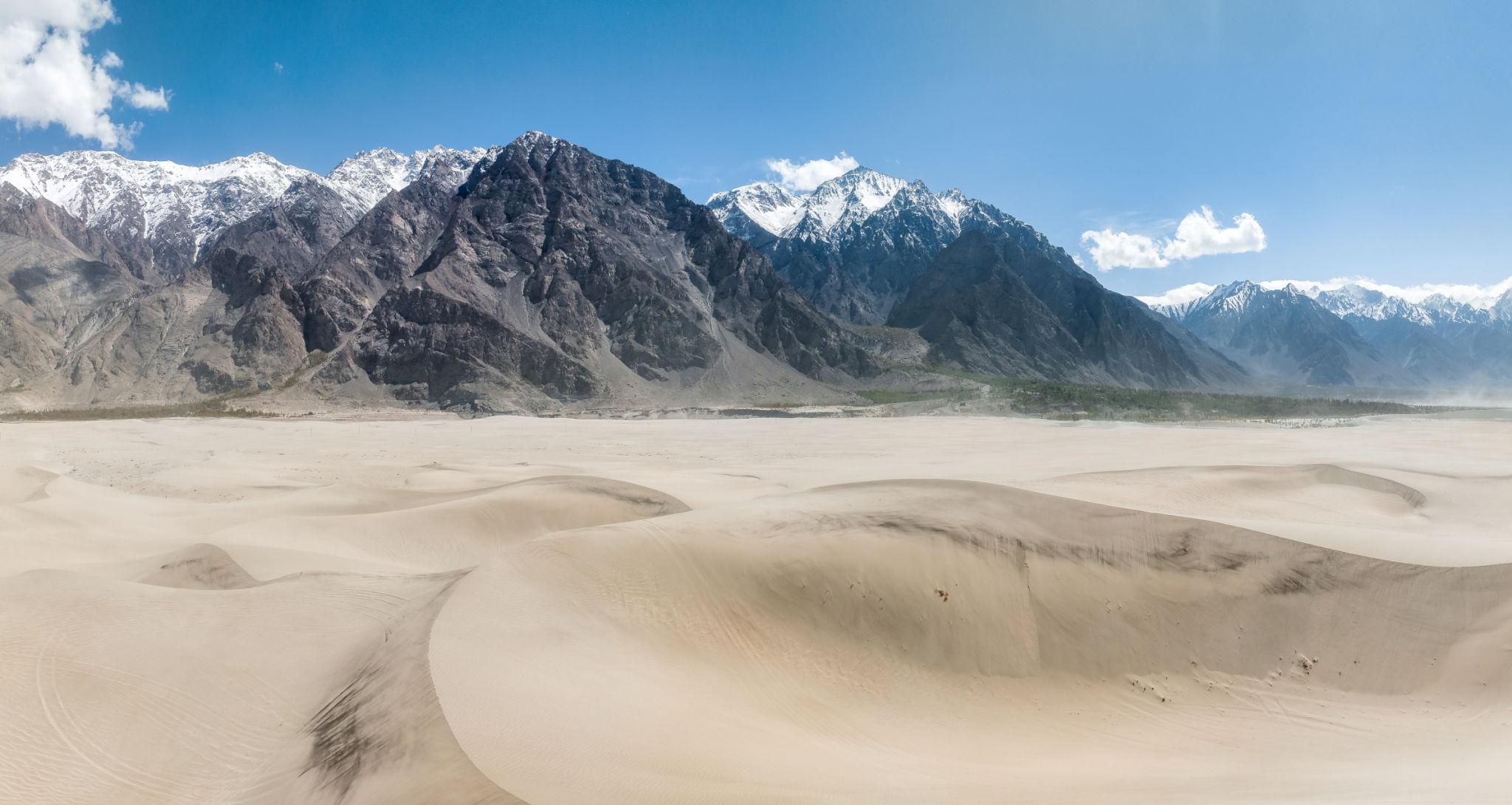


Located in Shigar District, around 20 kilometres from Skardu, Sarfaranga combines a desert landscape with the dramatic mountain scenery of northern Pakistan. It is a popular stop for photographers, road-trippers, adventure seekers and visitors travelling towards Shigar Valley. The desert is also known for the Sarfaranga Cold Desert Jeep Rally, an event that brings motorsport and local cultural celebrations to the region.
Whether you want to photograph the dunes at sunset, enjoy a scenic drive or experience the excitement of a desert rally, Sarfaranga deserves a place on your Skardu itinerary.

Elevation: Approximately 2,300 metres (7,500 feet)
Distance from Skardu: Around 20 kilometres
Typical driving time: Approximately 30–40 minutes, depending on the starting point and road conditions.
Best visiting season: Generally May to October.
Best experiences
Sand-dune photography, sunset views, scenic drives, permitted off-road activities and the annual Jeep Rally.
Nearby attractions
Shigar Fort, Shigar Valley, Katpana Cold Desert and other sights around Skardu.
Distance, elevation and seasonal guidance are approximate.
Sarfaranga Cold Desert lies in Shigar District, on the route connecting Skardu with Shigar Valley. The landscape is characterised by open sandy plains and dunes surrounded by rugged mountain terrain, with the Indus River flowing nearby.
Unlike the hot deserts of southern Pakistan, Sarfaranga sits at a high elevation, where winters can be extremely cold and snow may transform the appearance of the dunes. This combination of sand, cold mountain air and surrounding peaks gives the landscape its distinctive character.
Its location makes Sarfaranga easy to include in a day trip from Skardu or as a stop on the way to explore Shigar’s cultural heritage and surrounding valleys.
Sarfaranga’s most distinctive feature is its desert environment within the high mountains of Gilgit-Baltistan. At approximately 2,300 metres above sea level, it offers a striking contrast between sand dunes, dry terrain and the surrounding mountain landscape.
The area is often promoted as one of the world’s highest cold deserts. Because the ranking depends on how a desert is defined and measured, it is safer to describe Sarfaranga as one of the world’s highest-altitude cold deserts rather than claim an uncontested world record.
The dunes change appearance throughout the day. In the morning, softer light can reveal delicate ripples in the sand; later, stronger sunlight creates pronounced shadows across the slopes. At sunset, the sand can take on warmer shades against the darker mountains.
For landscape photographers, the attraction is the contrast between textures and colours rather than the dunes alone.
Summer brings more accessible travel conditions and opportunities to explore the area. In colder months, snow and frost can create a completely different scene, although temperatures and weather may make visits less comfortable.
The best time for a visit depends on whether you prioritise easy access, photography, cooler weather or the Jeep Rally.
The rally is the desert’s signature organised event. It features off-road motorsport and has been associated with motorcycle racing, cultural performances and traditional sporting activities. It can attract visitors from across Pakistan.
If you plan to attend, verify the official dates, programme, spectator access and any ticketing arrangements for that specific year.


Season | What to expect |
|---|---|
May–June | A good period to consider for quieter visits as the summer travel season develops. Check weather and local road conditions. |
July–August | Popular summer travel period, with opportunities to combine the desert with other Skardu-area attractions. |
September–October | Cooler conditions and potentially beautiful late-season light. Confirm the rally schedule rather than assuming a fixed date. |
November–March | Cold winter weather and possible snow. Visits may be possible, but check conditions, transport and local services first. |
April | A transition period; conditions vary, so plan flexibly. |
Best time of day: Early morning and late afternoon are good starting points for photography, when the light is generally softer. Sunset is particularly appealing, but check the local sunset time and arrange a safe return.
The rally’s date should be confirmed through the Gilgit-Baltistan Tourism Department’s current announcements. Older event calendars and third-party travel pages are not sufficient evidence for a confirmed 2026 date.

Sarfaranga is approximately 20 kilometres from Skardu along the road towards Shigar. A car or hired vehicle is generally suitable for reaching the area via the main road in normal conditions. A 4×4 may be needed for specific off-road activities, rather than simply travelling to the desert.
Travellers typically reach Skardu by air, when flights are operating, or by road through the northern mountain highway network. Flight schedules and road journey times can be affected by weather, so leave sufficient flexibility in your itinerary.
Once in Skardu, arrange local transport to Sarfaranga. A driver familiar with the Skardu–Shigar route can also help combine the visit with nearby attractions.
Skardu city: Begin your day with food, water and any supplies you need.
Sarfaranga Cold Desert: Explore the dunes and enjoy the views, allowing extra time for photography.
Shigar Fort: Continue towards Shigar for a cultural and heritage experience, subject to opening hours.
Shigar Valley: If time permits, explore the surrounding valley and local settlements before returning to Skardu or staying overnight in Shigar.

Travel from Skardu to Sarfaranga
Enjoy the drive towards Shigar, explore the desert landscape and take photographs in the morning light.
Visit Shigar Fort
Continue to this historic heritage site and learn about the architecture and cultural history of Baltistan. Check visitor access before setting out.

Late afternoon
Return for the best light, if practical
If your schedule and transport allow, spend time enjoying the changing colours of the dunes before returning to Skardu. Avoid rushing the drive after dark.
If you prefer a relaxed pace, visit Sarfaranga and Shigar Fort on separate half-days, especially if you are travelling with children or want time for photography.

Katpana Cold Desert
Another high-altitude desert landscape closer to Skardu city. It is a separate attraction, not another name for Sarfaranga. Visit both if you want to compare their landscapes.
A historic palace complex associated with the heritage of Baltistan. Its traditional architecture and gardens offer a cultural contrast to the desert’s open landscape.
Explore the valley’s settlements, agricultural landscapes and mountain scenery. A local guide can help you discover appropriate places to stop respectfully and safely.
Upper Kachura Lake
A scenic lake destination in the wider Skardu region. It is better planned as part of a broader itinerary rather than assumed to be a short detour from Sarfaranga.
A visit to Sarfaranga can be combined with an introduction to Balti culture and the food traditions of the wider Baltistan region. Depending on the restaurant or household, visitors may encounter dishes such as mamtu (dumplings), local noodle preparations, hearty soups and traditional breads.
When travelling through Shigar, consider supporting local restaurants, guides, drivers and small businesses. Ask before photographing people or entering private agricultural land, and follow local guidance about cultural customs.
Even on a sunny day, the temperature can feel cooler when wind moves across the open desert. A little preparation will make the visit more comfortable.
Sarfaranga’s open terrain may look simple to explore, but sand, wind and rapidly changing mountain weather still require care.
Stay aware of the weather and avoid exposed areas during strong winds or poor visibility.
Do not drive onto dunes unless the activity is permitted and you have a suitable vehicle and competent operator.
Keep clear of rally routes and follow organisers’ safety instructions during events.
Use drone equipment only after confirming applicable permissions and local restrictions.
Avoid littering, disturbing wildlife or damaging dune vegetation.
Carry enough water, protect yourself from the sun and keep children within sight around vehicles and uneven sand.
Check your transport arrangements before sunset and do not assume mobile coverage will be reliable everywhere.
Yes. It offers a distinctive high-altitude landscape, photographic opportunities and access to the wider Shigar region. It is especially worthwhile for travellers already visiting Skardu.
It is approximately 20 kilometres from Skardu city, commonly around 30–40 minutes by road, depending on the starting point and conditions.
No. They are two separate cold-desert locations. Sarfaranga is in Shigar District along the road towards Shigar Valley, while Katpana is closer to Skardu city.
The event has been organised in different published schedules, so check the latest official announcement for the year you plan to attend. Do not rely on older calendars to confirm the date.
A winter visit may be possible, and snow can create a striking landscape. However, cold temperatures, wind and changing road conditions make it important to check the forecast and transport arrangements first.
A normal suitable vehicle can generally reach the desert via the main Skardu–Shigar road in ordinary conditions. A 4×4 is recommended for authorised off-road excursions rather than being a universal requirement for reaching the site.
Around one to two hours may be enough for a short visit and photographs. Allow more time for an off-road activity, a detailed photography session or the Jeep Rally.

