
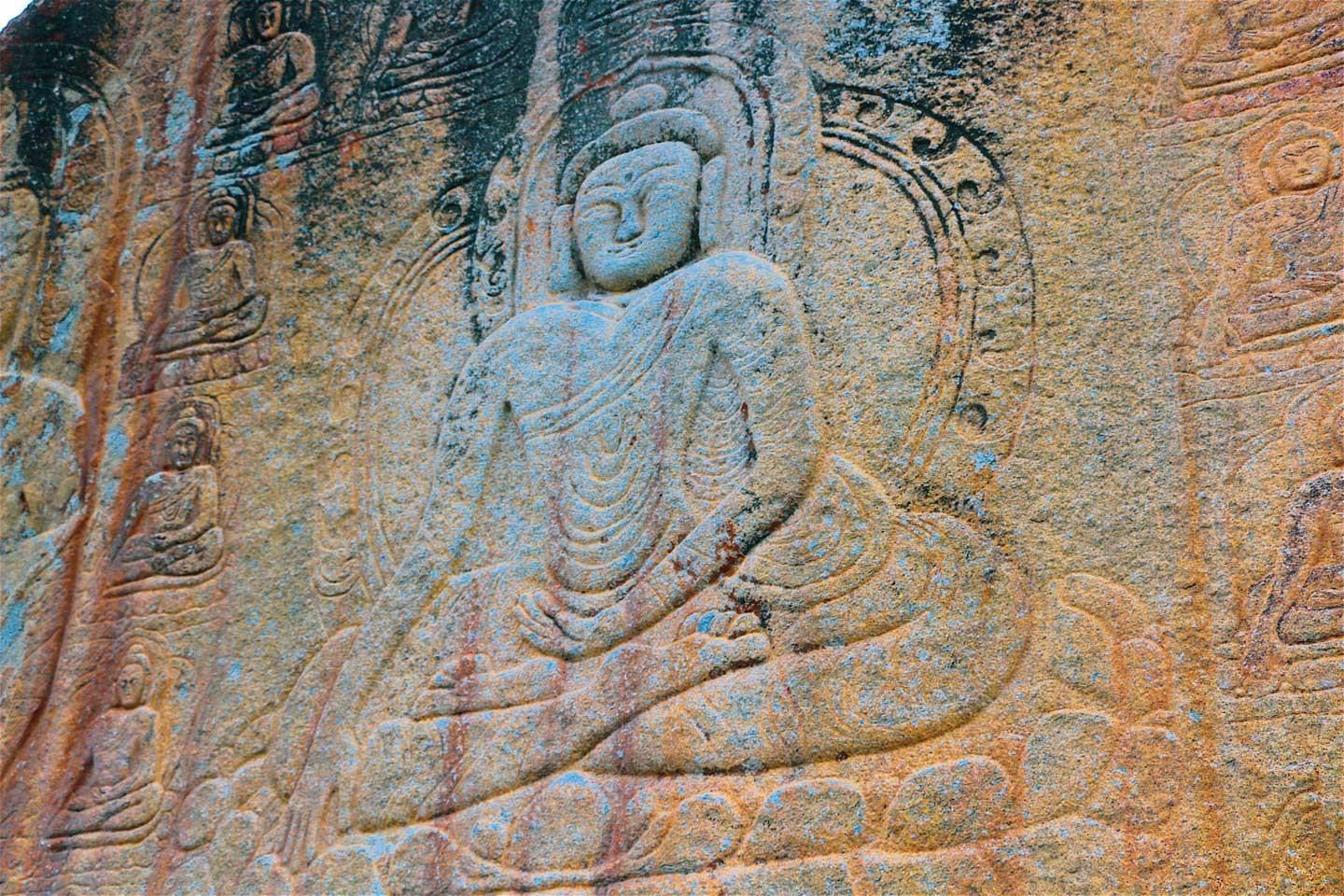
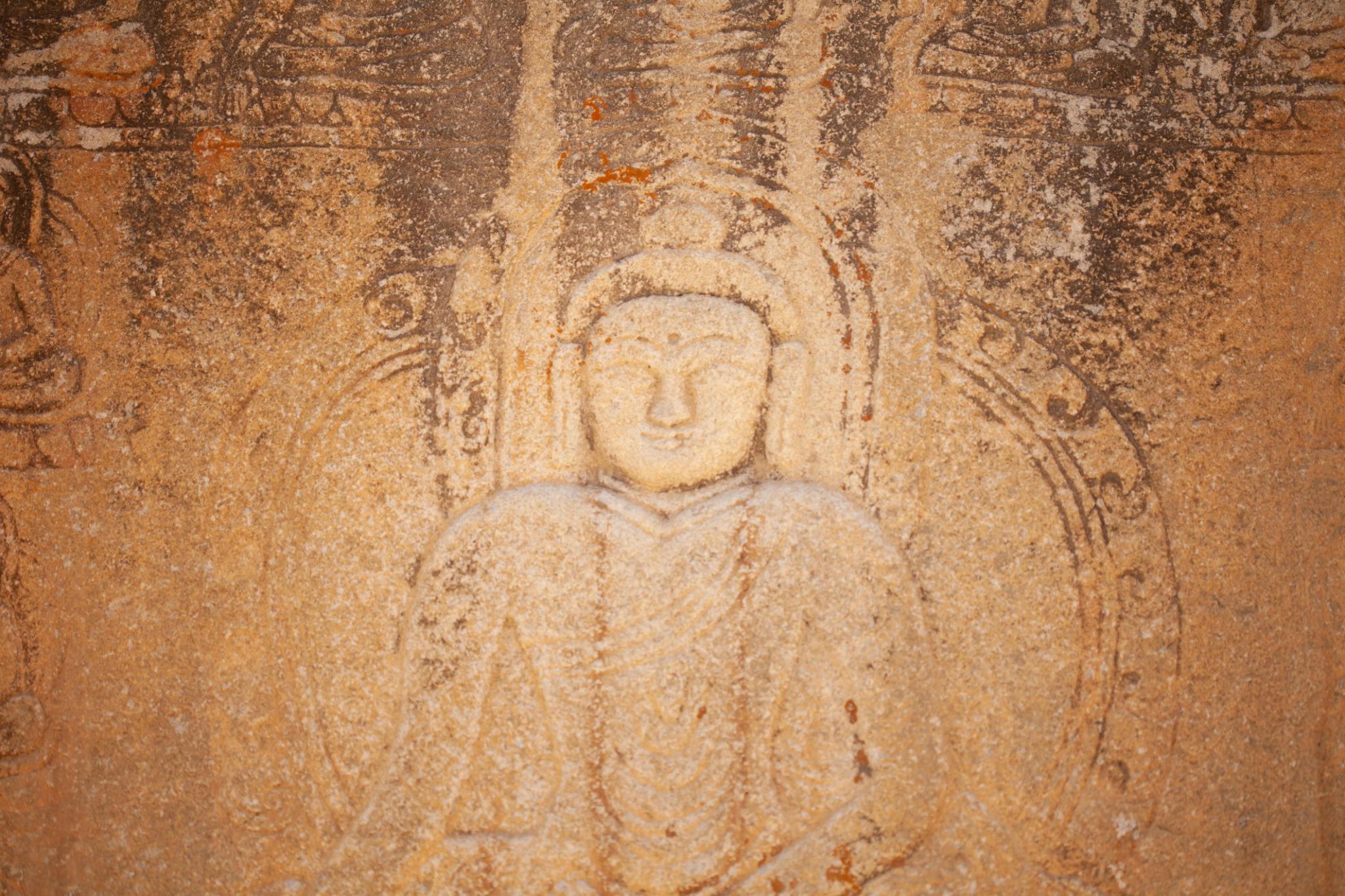


Long before Skardu became a gateway to some of the world’s most celebrated mountain adventures, the valleys of Baltistan were part of a wider world of religious, artistic and cultural exchange. One remarkable reminder of that history is Manthal Buddha Rock, an ancient granite boulder bearing Buddhist carvings and inscriptions in the outskirts of Skardu, Gilgit-Baltistan.
The rock features a large central Buddha surrounded by smaller seated figures and standing Bodhisattvas, together forming an extraordinary example of Buddhist rock art in northern Pakistan. Its inscriptions and carved imagery offer a glimpse into the region’s connections with Tibetan Buddhist traditions and the historic routes that linked mountain communities across Asia.
For travellers interested in history, archaeology, religion or cultural photography, Manthal Buddha Rock is one of the most meaningful places to include in a Skardu itinerary. It is a relatively short excursion from the city, making it easy to combine with other local attractions.
Historical period: Broadly dated to the early medieval period; the Government of Gilgit-Baltistan’s tourism guide associates it with the 8th century, while the Department of Archaeology and Museums catalogue gives a relative chronology of the 9th–10th centuries CE.
Distance from Skardu: Approximately 3 km south of Skardu town, according to the archaeological catalogue.
Type of attraction: Buddhist rock art and historical inscriptions.
Main highlight
A monumental carved Buddha, surrounding Buddhist figures and historic inscriptions on a large granite boulder.
How to visit
Travel from Skardu by local car or jeep and allow time to observe the carvings carefully. Confirm the current approach and site access locally.
Historical dating varies between official tourism and archaeological sources; the distinction is explained below.
Manthal Buddha Rock is situated in Manthal village, a short distance south of Skardu town, near the Sadpara stream and the road towards Sadpara Lake. The Government of Gilgit-Baltistan lists the site among Skardu’s principal historical attractions.
Its location makes it particularly convenient for visitors who are already exploring Skardu. Unlike high-altitude lakes and remote valleys that require several hours of driving, the rock can generally be visited as a short cultural excursion.
The surrounding landscape combines a rural settlement, rocky mountain terrain and the watercourse below the site. Although the carvings are the principal reason to visit, the setting also helps visitors appreciate how historic communities lived and travelled through this mountainous region.
The region around Skardu was once influenced by Buddhism, as reflected in its rock carvings, inscriptions and other archaeological remains. Baltistan’s position within the wider networks connecting the Himalayan region, Tibet and Central Asia helped ideas, artistic styles and religious traditions travel across mountain routes.
Manthal Buddha Rock is an important surviving example of this cultural heritage. Rather than being a freestanding statue, it is a large natural boulder on which religious figures were carved directly into the stone.
The main composition is organised around a central Buddha, with smaller seated Buddhas and standing Bodhisattvas arranged around it. Tibetan inscriptions appear on the lower portion of the rock. These features make the monument valuable not only for its religious imagery but also for the study of historical scripts, regional artistic traditions and the movement of Buddhist culture through the mountains.
There is a small but important difference between published dating references.
The official Gilgit-Baltistan tourism guide describes the carving as dating to the 8th century CE.
The Department of Archaeology and Museums’ catalogue assigns the site a relative chronology of the 9th–10th centuries CE.
The Government of Pakistan’s Buddhist Heritage Trail brochure also describes it as an 8th-century monument.
For a reliable destination guide, it is best to describe Manthal Buddha Rock as an early medieval Buddhist carving, commonly dated to around the 8th–10th centuries CE, while noting that published sources differ on the precise date.
The Government of Pakistan’s Buddhist Heritage Trail brochure records that Scottish traveller Ella Christie featured the carving in her account of travel in the Western Tibet region in 1906, helping bring the monument to wider attention.
Numerous smaller seated figures surround the central Buddha. The Department of Archaeology and Museums describes 23 principal figures in its catalogue: 21 seated Buddhas and two standing Bodhisattvas.
Look closely at the lower part of the boulder, where historic inscriptions are preserved. These marks are an important part of the monument’s archaeological value. Some sections have been damaged, so avoid touching or tracing the lettering with your hands.
The carving is made directly into a substantial natural granite boulder, rather than onto a constructed temple wall. The archaeological catalogue records dimensions of approximately 8.5 metres high and 8.2 metres wide.
Its scale becomes clearer when you view the entire boulder rather than concentrating only on the central image.
Manthal Buddha Rock is a cultural heritage site near Skardu rather than a remote high-altitude trekking destination. It can generally be incorporated into a Skardu visit during much of the year, subject to local weather and access arrangements.
Season | What to expect |
|---|---|
Spring (March–May) | Pleasant opportunities for cultural sightseeing as the weather improves, although early spring can still be cold. |
Summer (June–August) | A popular period for travelling around Skardu and combining cultural sites with lakes and mountain excursions. |
Autumn (September–November) | Cooler weather and potentially clear conditions for photography. |
Winter (December–February) | Cold conditions are possible, but a short visit may remain practical when the local road and site are accessible. |
Best time of day: Morning or late afternoon can provide good natural light for observing the carvings and taking photographs. If you are planning detailed photography, avoid harsh midday light where possible.
These are general travel suggestions, not a guarantee of opening hours or year-round access. Confirm current conditions locally before travelling.
The rock is located approximately 3 km south of Skardu town according to the Department of Archaeology and Museums. The Government of Gilgit-Baltistan tourism page also describes it as a short drive from the city.
First travel to Skardu by air when flights are operating, or by road through the northern mountain highway network. Flight schedules and road journey times depend on weather and other travel conditions.
Once in Skardu, Manthal Buddha Rock can be included in a half-day cultural excursion alongside other nearby attractions.
Start in Skardu city
Arrange local transport and check the site’s current visiting arrangements.
Visit Manthal Buddha Rock
Spend time observing the central Buddha, surrounding figures and inscriptions. Allow approximately 30–60 minutes for a straightforward visit, or longer if you are interested in archaeology and photography.
Continue towards Sadpara
If road and access conditions permit, continue towards Sadpara Lake or other sights along the same general route.
Return to Skardu
Finish with a visit to Skardu Bazaar or another cultural attraction in town.

Sadpara Lake
A scenic mountain lake south of Skardu. It pairs naturally with a visit to Manthal Buddha Rock for a day combining cultural heritage and landscape photography. Check road conditions and available activities locally.

Kharpocho Fort
A historic fort overlooking Skardu and the surrounding landscape. It offers a different perspective on Baltistan’s past, with views across the town and river valley.

Skardu Bazaar
Explore local shops, food and everyday town life. It is a convenient place to experience the modern culture of Baltistan after visiting the historic site.

Katpana Cold Desert
A distinctive landscape of sand dunes near Skardu. It is an excellent addition for travellers who want to combine cultural sightseeing with the region’s unusual natural scenery.
Manthal Buddha Rock is an irreplaceable archaeological monument. Its preservation matters not only to historians and archaeologists but also to the communities whose landscape contains this cultural heritage.
The Department of Archaeology and Museums documents damage to the lower portion of the carving and the loss of some inscription details.
Do not touch, scratch, chalk, paint or attempt to clean the carvings.
Never climb on the carved surface or remove stone fragments.
Do not apply water, powder or other materials to make inscriptions more visible for photographs.
Avoid littering and respect the surrounding village and private property.
Ask permission before photographing residents.
Follow local instructions about photography, access and any restricted areas.
Consider hiring a knowledgeable local guide to support the local economy and deepen your understanding of the site.
Most travellers stay in Skardu and visit the rock as part of a local sightseeing trip. Skardu offers the most practical base for access to transport, restaurants, shops and other attractions in the region.
You can choose accommodation according to your budget and travel style:
Hotels in Skardu: Convenient for a short visit and for exploring several attractions in one day.
Guesthouses: May provide a more personal introduction to local hospitality.
Heritage or scenic accommodation: Worth considering if you plan a longer trip around Skardu and neighbouring valleys.
Accommodation availability and prices vary by season. Check current rates and facilities directly with your chosen property.
It is famous for its ancient Buddhist rock carvings, including a central Buddha, surrounding seated figures, standing Bodhisattvas and historic inscriptions. It is one of the important archaeological heritage sites around Skardu.
Official tourism material commonly dates it to the 8th century CE, while the national archaeology catalogue assigns a relative chronology of the 9th–10th centuries CE. A broad 8th–10th-century date is a cautious way to describe it.
The archaeological catalogue places it about 3 km south of Skardu town. Actual driving distance depends on your starting point and the approach used.
Allow around 30–60 minutes for a straightforward visit. History enthusiasts, photographers and travellers with a guide may want longer.
It is an archaeological monument featuring Buddhist religious imagery. Visitors should treat the carvings respectfully as both cultural heritage and religious art.
Current entry fees and visiting arrangements could not be established consistently from the available official references. Check with the local tourism or archaeology authorities before visiting.
Yes, they can be combined in a local sightseeing itinerary, subject to road and access conditions. Confirm your route and transport timing with a local driver.
Manthal Buddha Rock offers a different way to experience Skardu. While the region is celebrated for its lakes, deserts and towering mountains, this ancient monument reveals a deeper cultural history shaped by Buddhist traditions, artistic expression and connections across Asia.
Its carved figures and surviving inscriptions deserve more than a quick photograph. Spend time looking closely, learn about the historical context and treat the monument with care. For visitors who want to understand Baltistan beyond its landscapes, Manthal Buddha Rock is an essential stop on a Skardu journey.

