

The wider area is also archaeologically significant. The Gilgit-Baltistan Tourism Department describes nearby Buddhist monastery and stupa remains, while the Government of Pakistan’s Buddhist Heritage Trail brochure records that a monastery and three stupas were excavated about 400 metres upstream in 1931. Sanskrit manuscripts were associated with these discoveries.
This wider context matters: Kargah Buddha is not merely an isolated image on a cliff. It is part of a landscape that preserves evidence of the region’s Buddhist past.
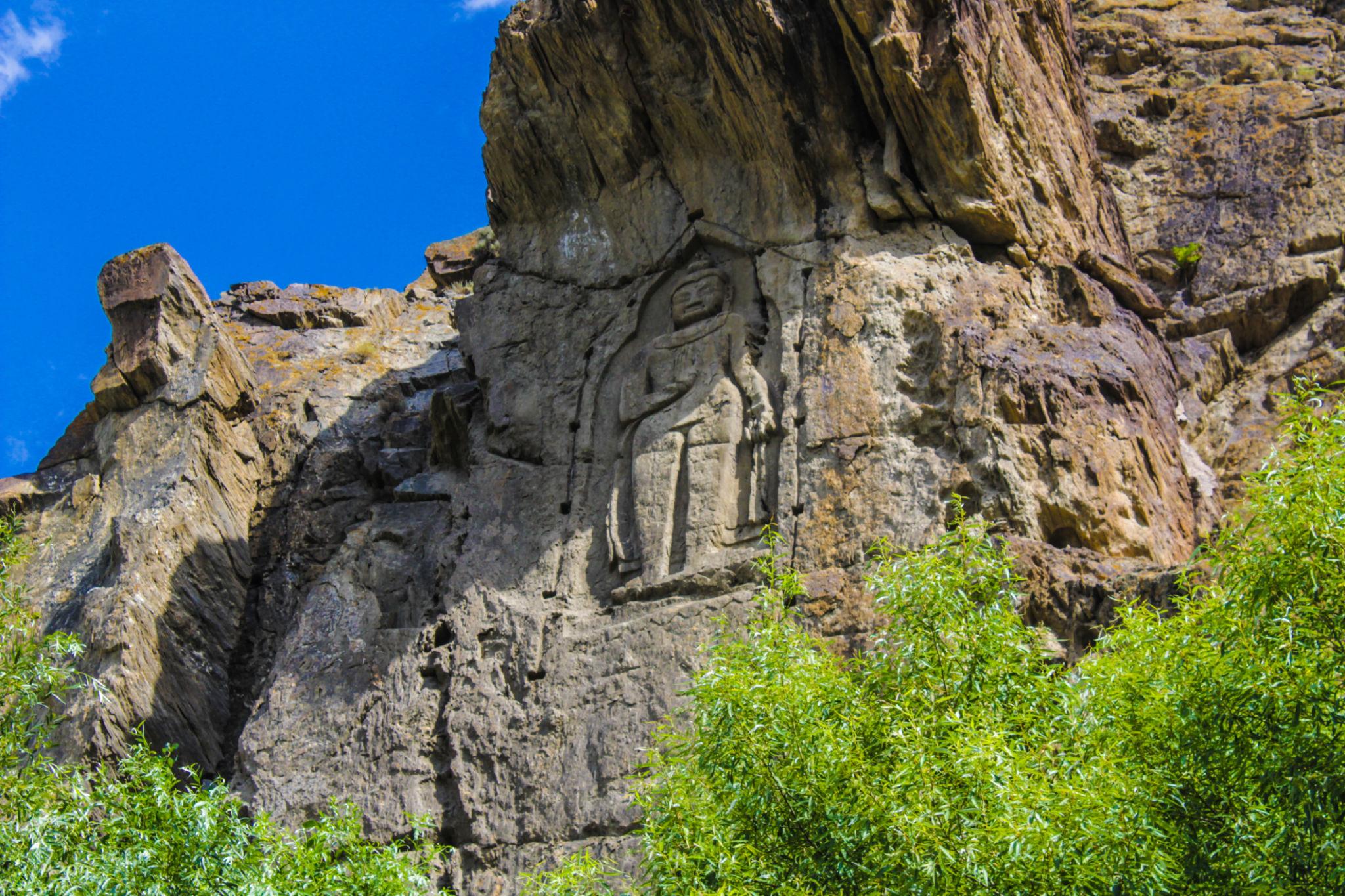
The monument is locally known as Yshani, a name connected in local tradition with a female supernatural figure or giantess. According to a story recorded by the Gilgit-Baltistan Tourism Department, a terrifying man-eating witch or giantess troubled local residents and was pinned to the cliff by a holy man named Dayal Khimocho.
This is a local legend, not an archaeological explanation of the monument. The carved figure is identified by heritage authorities as a standing Buddha. Presenting both the legend and the archaeological interpretation helps visitors understand how historic monuments can carry different meanings in local storytelling and historical research.
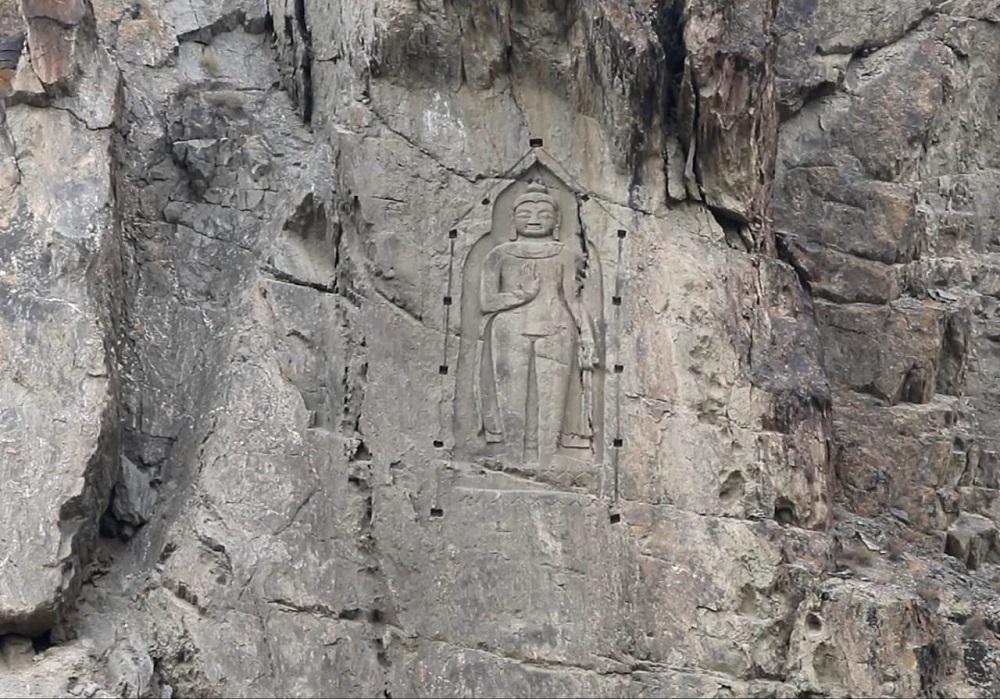
The main attraction is a standing Buddha carved directly into the cliff face. The figure is approximately 15 metres (50 feet) high, making it an impressive sight even from a distance. Take time to observe the figure’s outline, posture and relationship to the natural rock around it.
The valley’s importance extends beyond the main carving. Historical excavations in the vicinity revealed a Buddhist monastery and three stupas, along with Sanskrit manuscripts. These finds connect Kargah with the wider history of Buddhist learning in Gilgit.

Season | What to expect |
|---|---|
Spring (March–May) | A good period to consider for a short cultural excursion as the weather improves. |
Summer (June–August) | Convenient to combine with a broader Gilgit-Baltistan trip, though daytime conditions may be hot. |
Autumn (September–November) | Cooler weather and potentially clear conditions for photography. |
Winter (December–February) | Cold conditions are possible. Check local access and weather before setting out. |
Best time of day: Morning or late afternoon can be suitable for viewing and photography. The best light depends on the cliff’s orientation and the day’s conditions, so allow time to observe the carving from different permitted viewpoints.
These are general recommendations, not confirmed opening hours or a live weather forecast.

Kargah Buddha is located approximately 9.7 kilometres (six miles) outside Gilgit city, in Kargah Nala, according to the Gilgit-Baltistan Tourism Department.
A local car, taxi or hired vehicle is generally the most convenient option. Ask your driver to take you to Kargah Buddha in Kargah Nala and confirm the final approach before departure.
Because the site is relatively close to the city, it is suitable for a short excursion without needing to arrange an overnight stay in the valley.
Travellers can reach Gilgit by air when flights are operating, or by road via the Karakoram Highway network. The Government of Gilgit-Baltistan lists both air and road access to Gilgit, with flight and road journey times varying according to operating schedules and conditions.
Start in Gilgit city
Arrange transport and check the latest access conditions.
Visit Kargah Buddha
Observe the monumental carving and learn about its Buddhist historical context and local legend.
Explore the valley surroundings
Enjoy the landscape from permitted areas. Do not assume that all archaeological remains or paths in the valley are open to visitors.
Return to Gilgit
Continue with other city attractions, local markets or your onward journey.
Kargah Buddha
Spend approximately 45–60 minutes viewing the monument, taking photographs from permitted locations and reading about its historical significance.

Return to Gilgit
Enjoy a meal, explore the local bazaar or visit another accessible heritage attraction in the city.
The schedule is flexible. If you have a particular interest in archaeology, allow more time for the monument and arrange a knowledgeable guide in advance.

A historic tower near Gilgit associated with the region’s medieval history. It is a useful addition for travellers interested in architecture and historical landmarks.

Naltar Valley
Known for forested slopes, mountain scenery and alpine landscapes. It requires a separate excursion, with transport and road conditions checked in advance.

Bagrot Valley
A scenic valley with settlements, agricultural landscapes and mountain views. It offers a different experience from the cultural focus of Kargah Buddha.

Gilgit Bazaar
A convenient place to experience everyday city life, browse local shops and enjoy regional food after a visit to the archaeological site.
Kargah Buddha is a significant archaeological monument, and its long-term preservation depends on respectful visitor behaviour.
Do not touch, scratch, paint or attempt to clean the carving.
Never climb the cliff face or stand in unsafe areas to obtain a photograph.
Do not remove stones, fragments or other material from the site.
Avoid littering and respect the surrounding landscape.
Follow any site instructions concerning photography, access and conservation.
Ask permission before photographing local residents.
If you hire a guide, choose someone who can explain the monument’s history while respecting the archaeological evidence and local traditions.
The surrounding archaeological remains are also important. Visitors should not assume that every visible ruin or nearby area has been excavated, documented or made safe for public access.
It is famous for a monumental standing Buddha carved into a cliff in Kargah Nala, near Gilgit. The carving is an important example of the region’s Buddhist heritage.
Official sources commonly place the carving between the 4th and 7th centuries CE, with some sources specifically suggesting the 7th century. The precise date should be treated as an estimate.
The standing Buddha is approximately 15 metres, or 50 feet, high.
It is approximately 9.7 kilometres from Gilgit city, according to the official tourism department. Actual driving distance and time depend on your starting point and route.
Yshani is the local name associated with the site. Local tradition connects it with a supernatural female figure or giantess, while heritage authorities identify the carving as a Buddha.
Yes. Its proximity to Gilgit makes it suitable for a short excursion, and it can easily be incorporated into a half-day sightseeing plan.
A monastery and three stupas were excavated in the vicinity in 1931, and Sanskrit manuscripts were associated with the discoveries. Follow local guidance about access to archaeological remains.
I could not confirm a current official entry fee from the available sources. Check with the local tourism or archaeology authorities before visiting.
Kargah Buddha is one of Gilgit-Baltistan’s most compelling historical landmarks. Its monumental figure, carved directly into a mountain cliff, offers a tangible connection to the Buddhist communities that once lived, studied and travelled through this region.
The site is especially rewarding because it is easy to visit from Gilgit while offering a deeper historical perspective on a region often celebrated primarily for its mountains. Take time to observe the carving, learn about the archaeological discoveries and appreciate the distinction between the monument’s documented history and the local legend of Yshani.
For anyone seeking to understand Gilgit beyond its landscapes, Kargah Buddha is an essential cultural stop.

